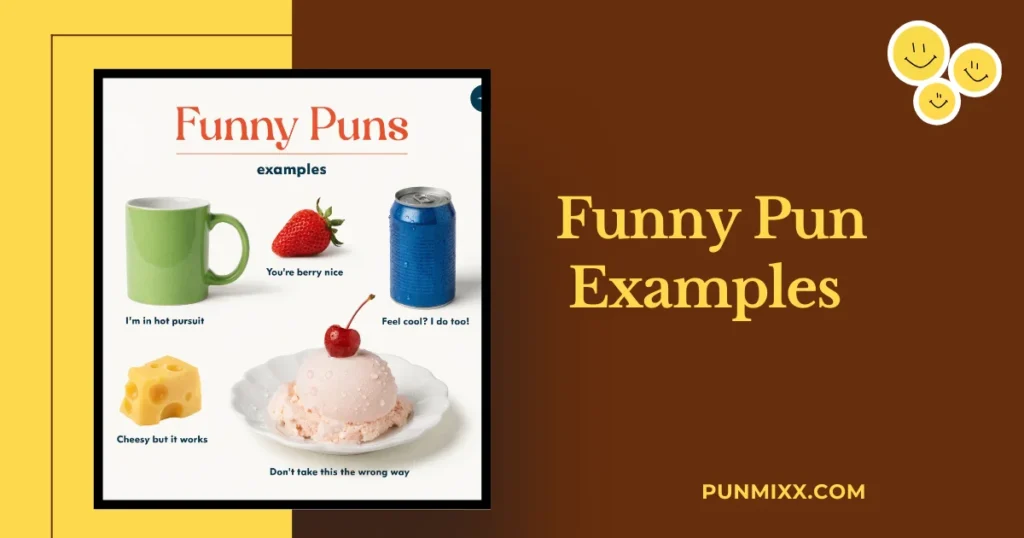
A pun example is one of the most fun ways to see how language can create humor and creativity at the same time. A pun uses a word or phrase that has more than one meaning or sounds like another word. This playful twist makes people smile because the sentence can be understood in more than one way.
Puns appear in everyday conversation, literature, jokes, and even advertising slogans. Many people search for pun examples funny, simple pun examples, or pun examples sentences to understand how this clever wordplay works. Whether you are a student learning about figures of speech or an adult looking for witty jokes, studying a pun example can help you see how flexible language can be.
In this guide you will explore different types of pun examples, including literary puns, simple wordplay, and sentence based humor. You will also see pun examples in literature, pun examples for students, and pun examples for adults. By the end, you will understand how puns work and how you can create your own.
What Is a Pun
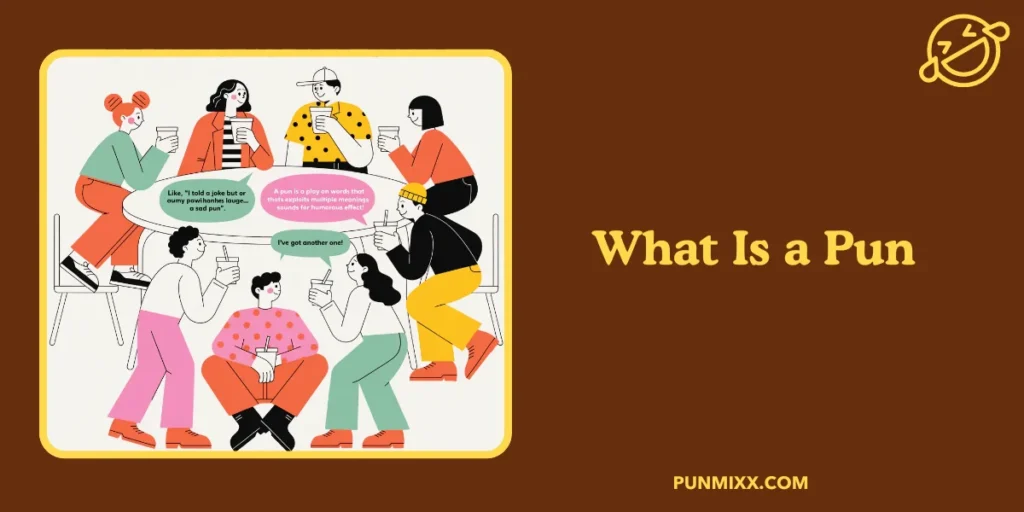
A pun is a type of wordplay where a word or phrase has two meanings or sounds similar to another word. Because of this double meaning, the sentence becomes humorous or clever. In simple terms, a pun is a figure of speech that creates humor through language.
For example, consider this pun example:
I used to be a banker but I lost interest.
The word interest has two meanings here. It can mean curiosity, but it also refers to money earned from a bank account. This double meaning creates the humor.
Another pun example is:
The bicycle could not stand up because it was two tired.
The phrase two tired sounds like too tired, which creates a playful twist.
These pun examples sentences show how a simple shift in meaning can turn an ordinary sentence into something entertaining. This is why puns appear in jokes, books, marketing slogans, and everyday conversation.
More Clever Puns You’ll Love
Why Writers Use Puns
Writers use puns for several reasons.
First, puns make content memorable. When readers encounter a clever pun example, they are more likely to remember the sentence or phrase.
Second, puns add humor to writing. Comedy writers and bloggers often use pun examples funny to entertain readers.
Third, puns show creativity. A well written pun demonstrates skill with language and word choice.
Finally, puns can make complex ideas easier to understand. In teaching, simple wordplay helps students connect with language in a fun way. This is why teachers often use pun examples for students when explaining figures of speech.
Pun Examples Sentences
Seeing a pun example in a full sentence helps readers understand how wordplay works in real language. Below are several pun examples sentences that show how one phrase can create humor through double meaning.
- I am reading a book about anti gravity. It is impossible to put down.
- The math teacher has too many problems.
- I used to be a baker but I could not make enough dough.
- The calendar was very popular because it had many dates.
- I stayed up all night wondering where the sun went. Then it dawned on me.
- The computer went to the doctor because it caught a virus.
- A boiled egg every morning is hard to beat.
- I wondered why the baseball kept getting bigger. Then it hit me.
- I used to play piano by ear but now I use my hands.
- The stadium got hot after all the fans left.
Each of these lines shows a clever pun example where one word carries two meanings. This is what makes puns enjoyable and easy to remember.
Simple Pun Examples
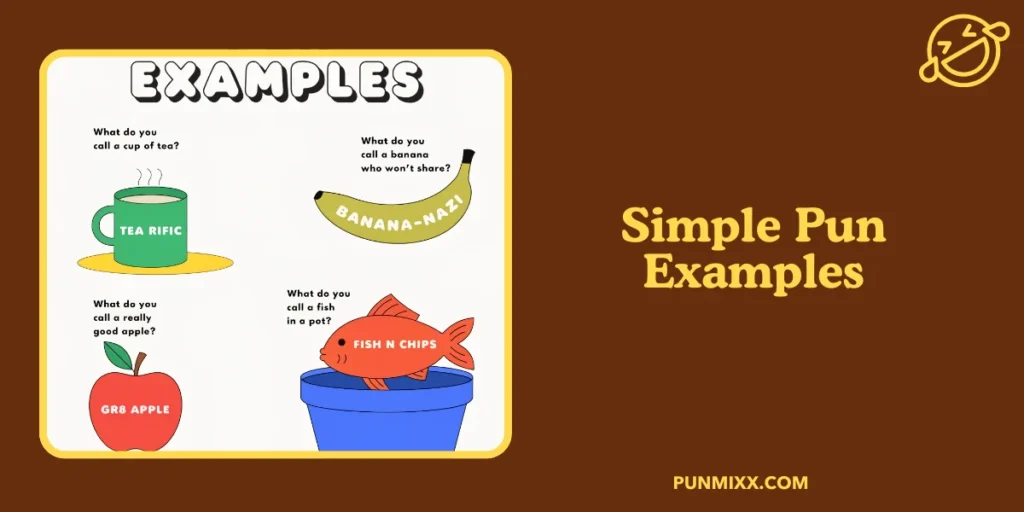
Many people enjoy simple pun examples because they are quick to understand and easy to share. These short lines often appear in jokes, captions, and everyday conversation.
Here are some simple pun examples that show how wordplay can create humor.
- I am on a seafood diet. I see food and I eat it.
- I used to be addicted to soap but I am clean now.
- I once told a chemistry joke but there was no reaction.
- I would tell a joke about construction but I am still working on it.
- The scarecrow won an award because he was outstanding in his field.
- I tried to catch fog yesterday. Mist.
- The music teacher got locked out of the classroom. She could not find the right key.
- I am friends with all electricians. We have great current connections.
- The bakery caught fire because the bread was toast.
- The clock factory closed because it ran out of time.
These simple pun examples are easy to remember and show how a clever twist can turn ordinary words into something entertaining.
Funny Pun Examples
Some puns are designed purely for laughter. Pun examples funny often appear in jokes, comedy shows, and social media captions.
Here are several funny puns that highlight creative wordplay.
- I used to hate facial hair but then it grew on me.
- I bought some shoes from a drug dealer. I do not know what he laced them with but I was tripping all day.
- I wanted to be a professional fisherman but I could not live on my net income.
- The dentist and the manicurist fought tooth and nail.
- The butcher backed into his meat grinder and got a little behind in his work.
- I used to work in a shoe recycling shop. It was sole destroying.
- The man who invented knock knock jokes should get a no bell prize.
- I am reading a book about glue. I cannot put it down.
- The bakery hired a new worker but he was not a good fit. He kept loafing around.
- I used to work in a mirror factory. I could really see myself doing that job.
Each funny pun example plays with sound or meaning to create humor.
Pun Examples as a Figure of Speech
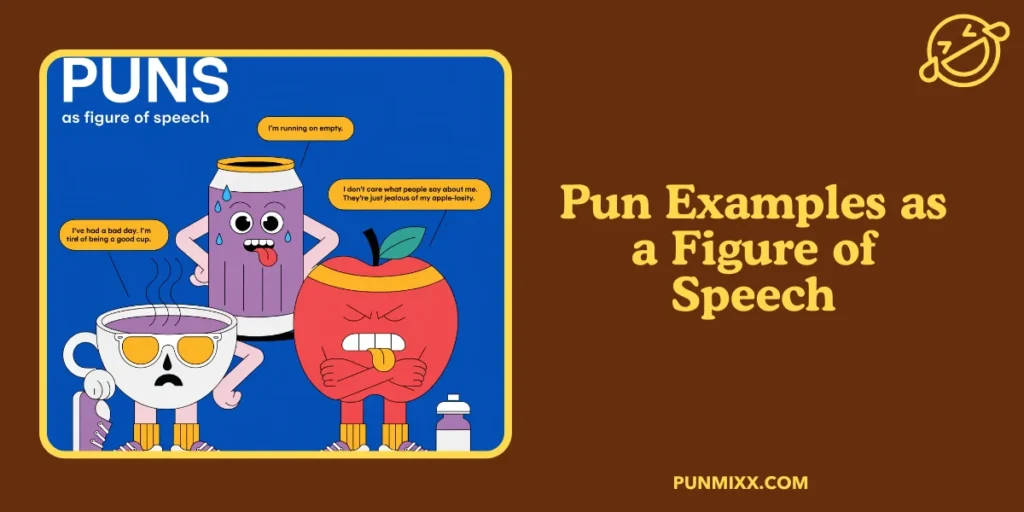
In language studies, a pun is considered a figure of speech because it uses creative wordplay to communicate more than one meaning. Writers often use puns to make their writing more engaging.
A pun example works by using words that sound similar or share different meanings. This linguistic trick allows the sentence to carry multiple interpretations at the same time.
For instance:
Time flies like an arrow. Fruit flies like a banana.
This pun example works because the phrase fruit flies can refer to insects or to fruit moving through the air. The double interpretation creates humor.
Understanding puns as a figure of speech helps students recognize them in literature, speeches, and creative writing.
Types of Puns
There are several types of puns used in language.
Homophonic Puns
Homophonic puns rely on words that sound alike but have different meanings.
Example:
I used to be a baker but I could not make enough dough.
The word dough refers to money and also bread mixture.
Homographic Puns
Homographic puns use words that have the same spelling but different meanings.
Example:
The fisherman was good at his job because he had great net results.
The word net refers to fishing equipment and also final results.
Compound Puns
Compound puns use multiple wordplay elements in one sentence.
Example:
A bicycle cannot stand alone because it is two tired.
This pun uses sound similarity and double meaning at the same time.
Visual Puns
Visual puns rely on images or symbols rather than words alone. They are common in advertisements and cartoons.
Understanding these types helps writers create stronger and more creative pun examples.
Pun Examples in Literature
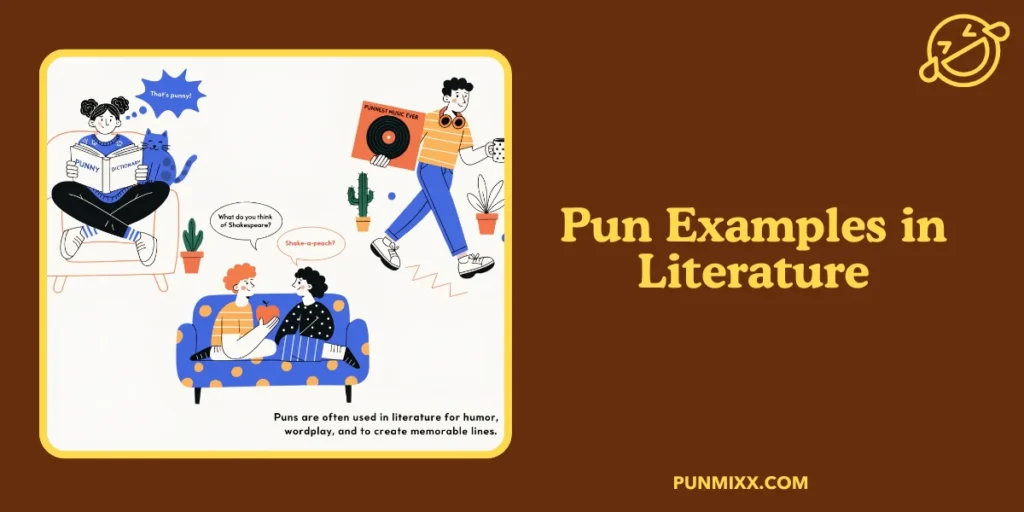
Writers have used puns in literature for centuries. Famous authors often include wordplay to add humor or clever meaning to their writing.
One well known pun example in literature appears in Shakespeare.
Ask for me tomorrow and you shall find me a grave man.
In this line from Romeo and Juliet, the word grave means serious but also refers to a burial place.
Another literary pun example is found in classic poetry where poets play with words that have layered meanings. This technique makes the text richer and more interesting.
Because of this tradition, teachers often introduce pun examples in literature when discussing rhetorical devices. Students learn how wordplay can add humor or hidden meaning to a story.
Pun Examples for Students
Learning about puns helps students understand language more deeply. Teachers often use pun examples for students because they are easy to remember and enjoyable.
Here are some simple examples suitable for learners.
- The student who loves math always has many problems.
- The history teacher loves the past.
- The science teacher has great chemistry with students.
- The art teacher draws attention everywhere.
- The geography teacher always finds the right direction.
These pun examples for students make language lessons more fun and interactive.
Pun Examples for Adults
Adults often enjoy more clever wordplay. These pun examples for adults can appear in workplace humor or social media captions.
- I used to work at a keyboard factory but I lost my keys.
- I wanted to become a chef but I did not have the thyme.
- The photographer developed a great career.
- The musician always had great notes.
- The gardener was very grounded in his work.
Each of these lines shows how a pun example can make everyday conversation more entertaining.
Ten Example of Pun
Here is a quick list of ten example of pun that clearly demonstrate wordplay.
- I used to be a banker but I lost interest.
- The bicycle was two tired to stand up.
- I wondered why the baseball kept getting bigger. Then it hit me.
- The calendar had many dates.
- A boiled egg is hard to beat.
- The scarecrow was outstanding in his field.
- The math teacher has too many problems.
- I am reading a book about anti gravity. It is impossible to put down.
- The computer had a virus.
- The bakery worker was loafing around.
Each pun example highlights how a single word can create humor through double meaning.
How to Create Your Own Puns
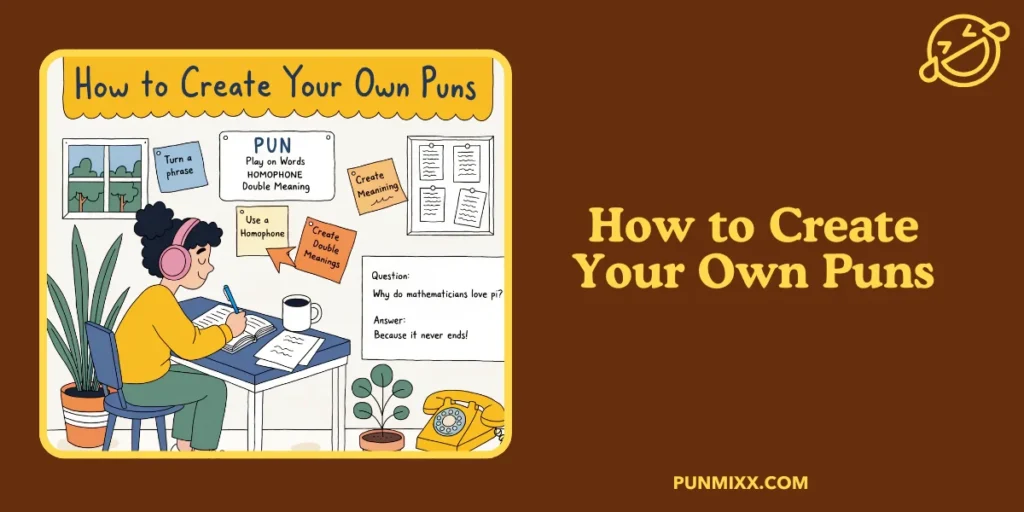
Creating a pun is easier than many people think. With a little creativity, anyone can make a clever pun example.
- First, look for words with more than one meaning. Words such as interest, date, or light often have multiple definitions.
- Second, find words that sound similar. Homophones create excellent pun opportunities.
- Third, place the word in a sentence where both meanings could apply.
- Finally, keep the sentence simple so the humor is easy to understand.
Practicing these steps will help you create your own funny and clever puns.
Common Mistakes When Writing Puns
Even though puns are fun, writers sometimes make mistakes when creating them.
One common mistake is forcing the wordplay. If the pun feels unnatural, readers may not understand the joke.
Another mistake is making the pun too complicated. A good pun example should be clear and easy to recognize.
Writers should also avoid using too many puns in one paragraph. Too much wordplay can distract readers from the main message.
Keeping the pun simple and natural usually works best.
Why Puns Are Popular in Language
Puns remain popular because they combine humor and creativity. When people hear a clever pun example, they enjoy the surprise of discovering the double meaning.
Puns also help people remember information. This is why advertisers often use wordplay in slogans.
Another reason puns are popular is that they make conversation more playful. A small joke based on wordplay can make everyday communication more enjoyable.
Because of these benefits, puns appear in literature, marketing, social media, and daily conversation.
When to Use Puns in Writing
Puns work well in several types of writing.
Blog writers use puns to make articles entertaining. Social media creators use puns in captions to attract attention. Advertisers use puns to make slogans memorable.
Puns also work well in speeches, jokes, and creative storytelling.
However, writers should always consider the audience. A simple pun example may work well for students, while a clever pun might appeal more to adults.
Using the right type of pun can make writing more engaging and enjoyable.
Final Thoughts on Pun Examples
A pun example shows how language can create humor through clever wordplay. By using words with double meanings or similar sounds, writers can craft sentences that surprise and entertain readers.
Throughout this guide you explored simple pun examples, pun example sentences, and funny pun examples that highlight the creativity of wordplay. You also learned about pun examples in literature, along with examples designed for both students and adults.
Understanding how puns work can help you appreciate humor in language and even create your own jokes. With a little practice, anyone can turn ordinary words into a memorable pun.
Frequency Asked Question About Pun Example
Q1. What is a pun example?
A pun example is a sentence or phrase that uses a word with more than one meaning or words that sound similar to create humor. For example, “I used to be a banker but I lost interest.” The word interest refers to both money and curiosity.
Q2. What are some simple pun examples?
Here are a few simple pun examples:
I am reading a book about anti gravity. It is impossible to put down. The math teacher has too many problems. A boiled egg every morning is hard to beat.
The calendar was very popular because it had many dates.
These short sentences show how wordplay can make language entertaining.
Q3. What are pun examples in sentences?
Pun examples sentences show how a word with double meaning creates humor. For instance, “The bicycle could not stand up because it was two tired.” The phrase two tired sounds like too tired, creating the pun.
Q4. What are pun examples in literature?
Pun examples in literature are commonly used by famous writers to add humor or deeper meaning. A well known example appears in Shakespeare when a character says, “Ask for me tomorrow and you shall find me a grave man.” The word grave means serious and also refers to a burial place.
Q5. Why are puns considered a figure of speech?
Puns are considered a figure of speech because they rely on creative language and double meanings. Writers use puns to add humor, cleverness, and depth to their writing.